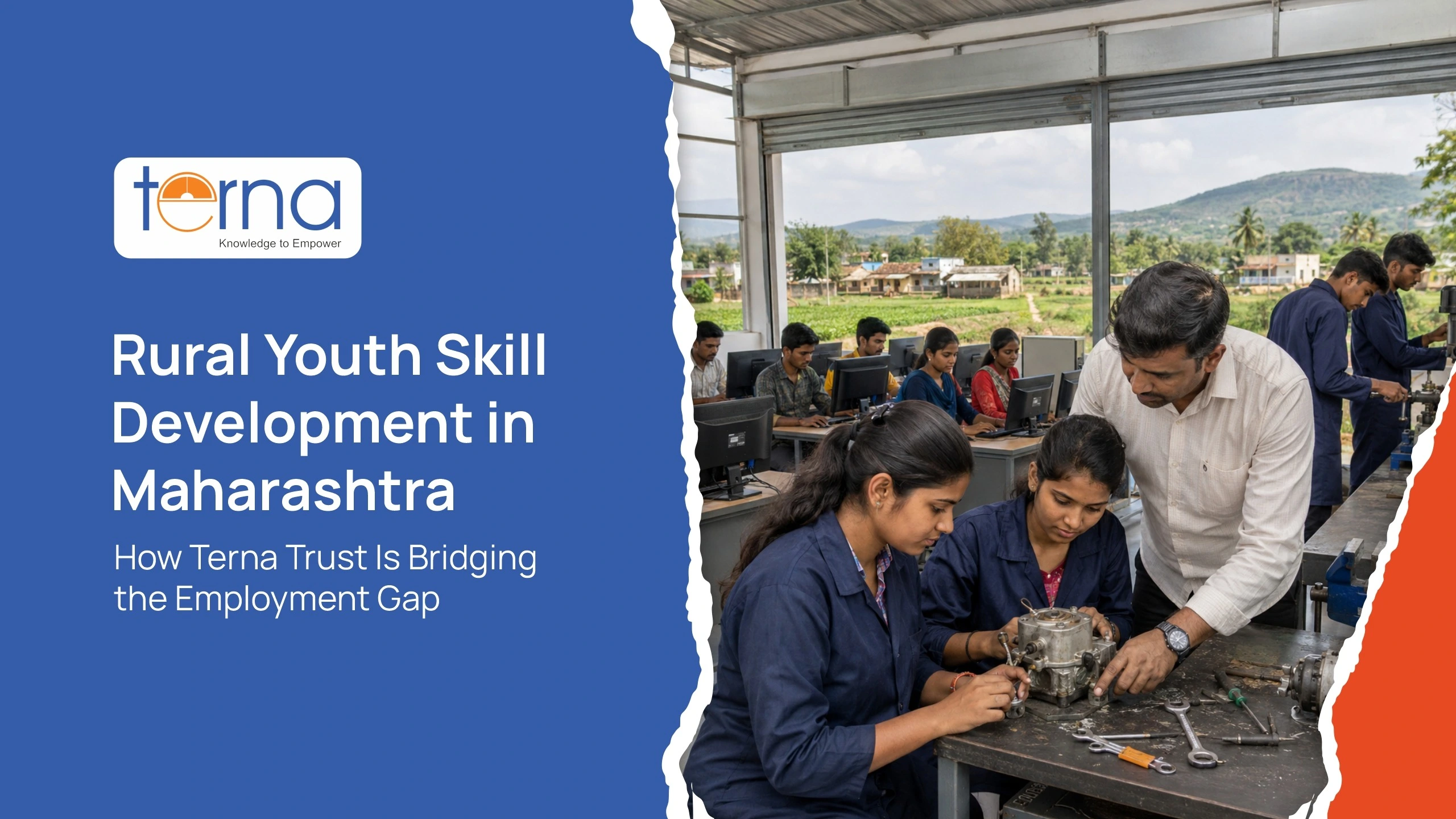
Why young people in Maharashtra still struggle to find work
Rural youth unemployment for ages 15 to 29 stood at 8.3% in 2025, according to the Periodic Labour Force Survey. Maharashtra tracks close to that national figure.
The bigger issue is the type of work on offer. A 2026 NITI Aayog paper by Dr Arvind Virmani found that only 23% of Indian workers hold regular salaried jobs. Another 58% are self-employed and 19% do casual work. Most young people won’t walk into a corporate office after college. They need skills for the work that actually exists around them.
The “missing middle” in India’s skilling system
The same paper describes the problem clearly. Companies and placement firms do a fair job of linking highly skilled graduates to well-paid jobs. Lower down, that link gets weak. At the bottom it barely exists.
The paper’s employability figures for 2025 show the slope:
| Qualification | Employability (2025) |
| Professional courses (BE/BTech, MBA, MCA) | 70-78% |
| University degrees (BA, BCom, BSc) | 55-58% |
| ITIs | just over 40% |
| Polytechnics | just under 30% |
Its recommendation is blunt. State and local governments and NGOs need to do much more in the middle and lower levels, backed by industry and CSR funds.
What a skill development NGO in Maharashtra actually does
NGO programmes fill the gap that employers leave. Only 7.7% of Indian firms run formal training for their own staff, compared with 38% in Mexico, per NITI. Someone else has to teach the practical side.
In practice, that work looks like this:
- Training students from small towns and farming families who aren’t on any recruiter’s list
- Teaching skills for self-employment, since most Indian work is self-run
- Working with local employers so a course matches real openings
- Using CSR partnerships to pay for equipment, trainers and seats
How Terna Trust is closing the employment gap
Terna Public Charitable Trust has worked in Marathwada and Navi Mumbai for 45 years. Its skilling work today runs through three of its institutions.
Drone training in Dharashiv
Terna Institute of Drone Technology trains young people to fly and operate drones. The demand is there. DGCA had issued over 21,000 remote pilot certificates by December 2024, and industry estimates put the need at more than 1 lakh pilots by 2027. For farm families, crop spraying and field mapping are jobs close to home.
B.Voc at Terna Engineering College
The Bachelor of Vocation pairs a recognised degree with hands-on industry training. Students leave with a qualification and a skill they can use from the first week of a job.
Nursing and allied health
Terna Nursing College and Terna Physiotherapy College in Navi Mumbai train students for healthcare, a sector that keeps hiring in India and abroad. Read more about our work in rural youth skill development.
What the Maharashtra Skill Policy 2026-2030 means for NGOs
Maharashtra has released a draft Skill Policy 2026-2030 for public comment. One of its stated aims is wider youth access to skill training and vocational education. If the state follows through, NGOs already running training on the ground are the obvious partners.
How you can support skill development in Maharashtra
A donation can pay for a training seat, simulator time for a drone trainee or a placement drive in a district town. Companies can fund the same work through CSR. Donate to Terna Trust, or write to contact@ternatrust.org to talk about a CSR partnership.
Frequently Asked Questions
A skill development NGO trains people in practical, job-linked skills, usually for groups that colleges and employers don't reach. It may run short certified courses, connect students with local employers and help trainees start their own small businesses.
Skills tied to local demand tend to work best. In Marathwada that includes agricultural drone operation. In cities, healthcare and technical trades hire steadily. Short certified courses can lead to paid work sooner than a general degree.
Yes. Schedule VII of the Companies Act, 2013 lists education and employment-enhancing vocational skills as eligible CSR activities. Companies can fund training seats, equipment or placement programmes run by registered NGOs and trusts.
You can donate, volunteer as a trainer or mentor, or connect your employer's CSR team with the NGO.